
Friday Mailbag! 📬
Let's open the mail

I left legacy media to build something different: independent, honest political analysis with no corporate or partisan agenda.
I call balls and strikes ⚾ — because politics needs referees, not cheerleaders.
If you want clear, concise analysis that cuts through the noise, subscribe today. You’ll get what actually matters—not just what people want you to hear. 🎯
Happy Friday.
We. Made. It.
I am headed out of town for the weekend. But before I go, let’s open the mail!
A always, these are real questions from real paid subscribers to this newsletter.
Not a paid subscriber yet? Become one today! It’s $6 a month or $60 for the whole year!
Q: Now that El Sayed has won the Democratic primary in Michigan, have the chances of Democrats regaining control of the Senate diminished significantly?
A: I did a quick scan of the prediction markets and the political forecasts.
On Polymarket, a sponsor of this newsletter, the odds have not appreciably changed post-El-Sayed victory:
In the Decision Desk HQ 2026 Election Forecast, Republicans’ chances of holding their Senate majority have actually declined — albeit very slightly — over the last week.
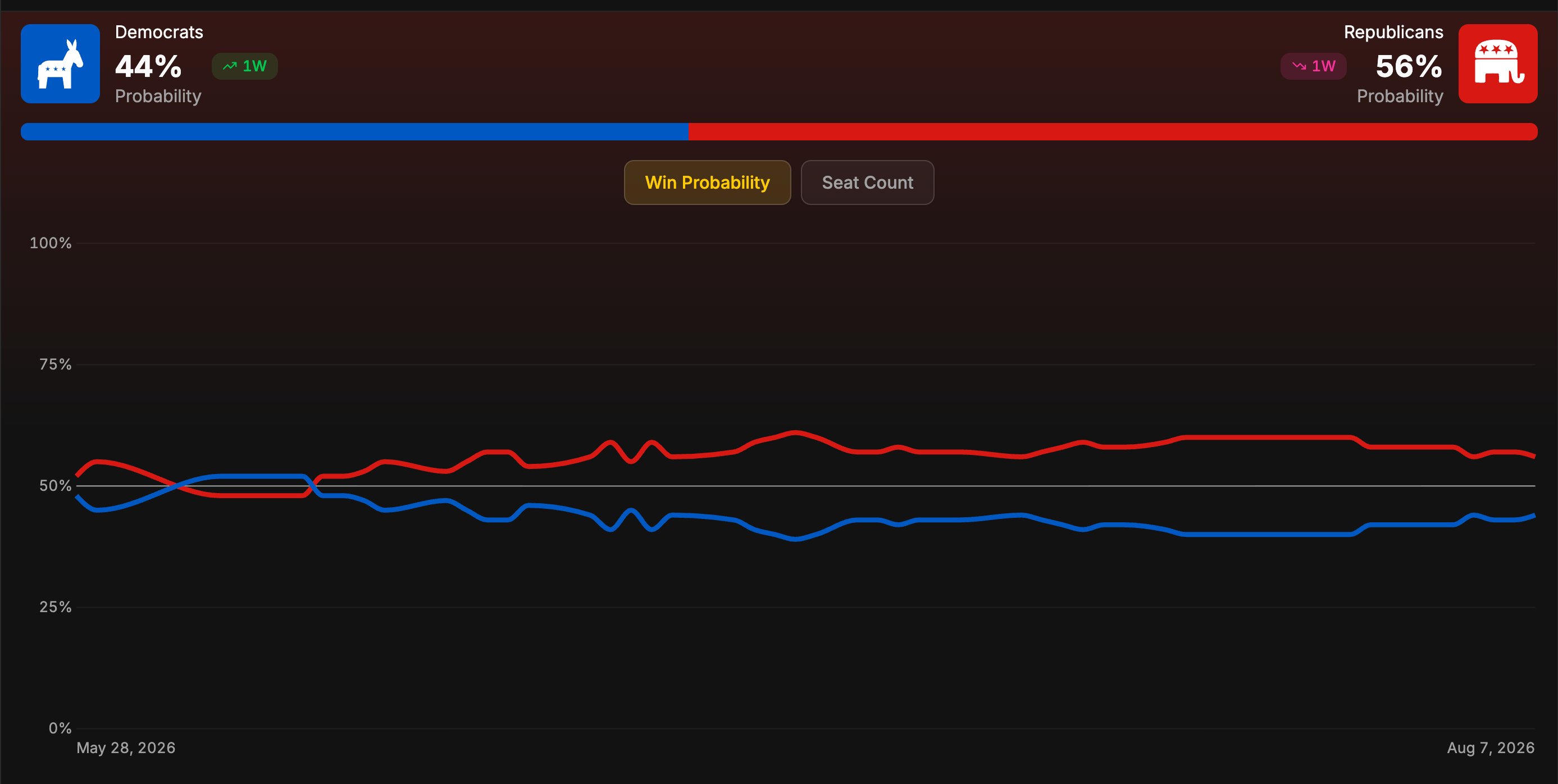
Which all gibes with my sense of Michigan as well.
I think this race was a toss-up whether El-Sayed or Stevens won the primary. I know Stevens spent a bunch of time insisting that electability was the central issue of the primary. But all the polling I saw showed both of the Democrats running within the margin of error against former GOP Rep. Mike Rogers.
I get that people who are leery of the Democratic Socialist influence within the Democratic party think El-Sayed represents a major risk as the nominee in a swing state like Michigan.
And I agree that El-Sayed is a bit riskier than Stevens. But I also think El-Sayed has a higher vote ceiling than Stevens would have. And will be able to drive the “outsider vs insider” contrast against Rogers far more effectively than Stevens would have.
The general election is just starting. Let’s see how El-Sayed wears with crucial swing voters — and how quickly he is able to unite the Democratic base behind his candidacy — before we make hard and fast judgments about whether he can or can’t win.
Q: Hi, Chris. Can you talk more about Michigan polling and why it was so bad and why that state is so difficult to poll? What can be done to improve it and what other states also have poor polling reps?
